I´m caught up a lot in work and studies these days, so the next post here won´t be before the end of March. Thanks for your patience.
Freitag, 1. März 2013

Samstag, 19. Januar 2013
Gute Nacht, Freunde....
Vorletzte Woche war die letzte offizielle Unterrichtswoche des Semesters, und da ich aufgrund eines neuen Jobs meinen Ende Januar auslaufenden Vertrag mit der Universität nicht verlängert habe hiess es Abschied nehmen von meinen Studenten bevor sie alle über die Semesterferien in ihre Heimatstädte zurückfahren.
Da an einer technischen Universität sich die Zahl der Fremdsprachen-Studenten in Gernzen hält und der Großteil auch noch Enlisch studiert ist die Anzahl meiner Kurse und Studenten schon immer überschaubar gewesen - eine Tatsache die sich für den Unterricht selbst meistens als Vorteil entpuppt hat ( die Englischlehrer unterrichten teilweise mehrere hundert Studenten gleichzeitig in einem Kurs) - und auch die Organisation von Abschiedsessen relativ einfach macht. Ein Jahrgang, ein Essen, ein etwas größeres Separee in einem gescheiten Restaurant (oder Pizzaladen, wie im letzten Bild) - fertig.
Hier also meine Studenten, denen ich zwei Semester lang die Freuden und Komplexitäten der deutschen Sprache näherbringen durfte:
Zunächst 2/3 von Klasse 0901, den Studenten im 7. Semester. Sie werden nächstes Semester die ersten Studenten sein die an der 东北大学 (Northeastern University) ihren Abschluss in Germanistik machen. Die ersten beiden Jahre mussten sie ohne muttersprachlichen Lehrer auskommen, dafür sind bei den Meisten die Deutsch-Kenntnisse doch erstaunlich gut, da haben die chinesischen Lehrer mit wenig Ausstattung dennoch einiges erreicht - allen voran der derzeitige Institutsleiter, im Bild rechts neben mir. Diese Klasse hatte das Vergnügen sich von mir in Wirtschaftsdeutsch, Zeitung lesen sowie Hörverständnis für Fortgeschrittene unterrichten zu lassen.
Ein paar Tage später dann 16 meiner 19 Fünftsemester. Links neben mir ist meine Kollegin Mandy die ein paar Monate nach mir begonnen hat und auch weiter an der Universität bleiben wird. Als echte Germanistin ist sie vor Allem für Kurse in deutscher Literatur und Literaturgeschichte verantwortlich und bringt den Studenten bei, vernünftige Texte, Essays und später auch mal`ne Bachelorarbeit zu verfassen. Ich hatte die Fünftsemester in Hörverständnis Mittelstufe/Fortgeschrittene sowie den Zeitungslesekurs.
Wiederum ein paar Tage später dann Pizzaessen mit den Studenten aus dem 3. Semester, mit denen ich unglaublich viel Spass in zwei Semestern Konversationskurs hatte.
Ich hoffe den Studenten wird`s gefallen. Darüber hinaus bleibt noch eine Kleinigkeit aus meiner Lehrtätigkeit in China - meine Mitarbeit an einem Hörverständnisbuch, für dass ich und meine Freundin die Dialoge eingesprochen haben:

 "Während der Erstellung des Buches hat Herr Winkelmann, deutscher Lehrer an der Dongbei Universität, die Korrekturlesung des gesamten Buches durchgeführt und dabei sehr viele wertvolle Ideen und Vorschläge eingebracht sowie darüber hinaus mit Frau Anne Pinkert gemeinsam die Tonaufnahmen für dieses Buch gemacht. Aus diesem Grund möchten wir an dieser Stelle für diese große Unterstützung unseren tiefsten Dank ausdrücken."
Und da ich blöderweise den Post von damals aus Versehen gelöscht habe, hier noch einmal zum Abschluss Lektion 21 aus dem Buch - "Scherben bringen Glück" - diese Mal auf youtube.
Da an einer technischen Universität sich die Zahl der Fremdsprachen-Studenten in Gernzen hält und der Großteil auch noch Enlisch studiert ist die Anzahl meiner Kurse und Studenten schon immer überschaubar gewesen - eine Tatsache die sich für den Unterricht selbst meistens als Vorteil entpuppt hat ( die Englischlehrer unterrichten teilweise mehrere hundert Studenten gleichzeitig in einem Kurs) - und auch die Organisation von Abschiedsessen relativ einfach macht. Ein Jahrgang, ein Essen, ein etwas größeres Separee in einem gescheiten Restaurant (oder Pizzaladen, wie im letzten Bild) - fertig.
Hier also meine Studenten, denen ich zwei Semester lang die Freuden und Komplexitäten der deutschen Sprache näherbringen durfte:
 | |
| Klasse 0901 - die 7.-Semester. |
 | |
| Klasse 1001 - 5. Semester. |
Ein paar Tage später dann 16 meiner 19 Fünftsemester. Links neben mir ist meine Kollegin Mandy die ein paar Monate nach mir begonnen hat und auch weiter an der Universität bleiben wird. Als echte Germanistin ist sie vor Allem für Kurse in deutscher Literatur und Literaturgeschichte verantwortlich und bringt den Studenten bei, vernünftige Texte, Essays und später auch mal`ne Bachelorarbeit zu verfassen. Ich hatte die Fünftsemester in Hörverständnis Mittelstufe/Fortgeschrittene sowie den Zeitungslesekurs.
 |
| Klasse 1101 - 3. Semester |
Zum Abschied bekam jeder Student von mir eine CD mit einer Dokumentation über die schönsten Städte Deutschlands (keiner von ihnen ist bislang jemals dort gewesen) sowie eine kleine Selektion zeitgenössischer deutschsprachiger Musik, alle inkl. Musikvideo, die doch ein wenig auf den vorherrschenden 90%igen Frauenanteil des Studiengangs zugeschnitten war, aber dennoch ein Querschnitt durch die letzten 30 - 40 Jahre dt. Musikgeschichte sein sollte:
2raumwohnung - Besser geht`s nicht
Annett Louisan - das Spiel
Blumentopf - macht Platz
Blumfeld - Diktatur der Angepassten
Bosse - Liebe ist leise
Deichkind - Limit
die Ärzte - ein Song namens Schunder
die fantastischen Vier - populär
die Sterne - was hat dich bloß so ruiniert
die Toten Hosen - Steh auf, wenn du am Boden bist
Fettes Brot - Jein
Helge Schneider - Katzenklo
Herbert Grönemeyer - Bochum & der Weg
Juli - die perfekte Welle
kettcar - Landungsbrücken raus
Kraftklub - eure Mädchen
Madsen - Lass die Musik an
Marius Müller Westernhagen - Freiheit
Mia - hungriges Herz
Nena - nur geträumt
Paula - Als es passierte
Peter Schilling - Major Tom
Rammstein - Mann gegen Mann & Rosenrot
Reinhard May - Gute Nacht, Freunde (als Abschluss der CD)
Revolverheld - Mit dir chill´n
Seeed - Aufsteh´n
Silbermond - durch die Nacht
Sportfreunde Stiller - ein Kompliment
Tocotronic - Pure Vernunft darf niemals siegen
Tomte - Korn und Sprite
Ton, Steine, Scherben - Halt dich an deiner Liebe fest
Udo Lindenberg - Mädchen aus Ostberlin
Unheilig - Geboren um zu leben
Wir sind Helden - Müssen nur wollen
Wolfsheim - Kein Zurück
Xavier Naidoo - Sie sieht mich einfach nicht
Und da ich blöderweise den Post von damals aus Versehen gelöscht habe, hier noch einmal zum Abschluss Lektion 21 aus dem Buch - "Scherben bringen Glück" - diese Mal auf youtube.
Sonntag, 13. Januar 2013
China`s good for Skiing,too.
When you think of China, winter sports normally are not the first thing that jump into your mind. Or have you ever seen or a Chinese on skis or a snowboard?
Well, I haven`t. Although I´m living in China`s northeast for over a year, with its 5 months of winter and temperatures down to - 30 °. Until recently, when we booked a one day tour to a local recreation area that`s converted into a ski resort during winter - well, that might have been the reason I never saw one. They don`t ski IN a metropole with 8 million people.

It´s a pretty good deal - the 30 km busride to the resort and back, entrance and equipment rental fee as well as insurance included for together 125 RMB (about 15 €). Pretty cheap for a whole afternoon in the snow, at least according to western standards.
So we and our Malaysian co-worker Danny went. For him it was his first time skiing ever - and our last time goes way back as well - we were still in school then.


The day we went was a national holiday, so we expected, as usual when you go to somewhere public where you can have fun or recreate, heaps of people - and there was even a local snowboard series competition that day. First price 3000 RMB (about 370 €) - that`s close to the average monthly income in this country.

But our fears were without reason - although we had to wait almost an hour till we got our ski passes, but that was due to poor organization by the company - unfortunately not that unusual in China.
Anyhoo, off we went - first renting the gear, which they unexpectedly and also conveniently had in big sizes,too:


And the on to the slopes. Well, as there are no real mountains around Shenyang, it was rather just bigger and smaller ant hills:


But we had a lot of fun, as it wasn`t as crowded as expected, especially on the "bigger ant hill", as most Chinese stayed on the not so steep slopes. You could clearly see that skiing is a sport that the Chinese just start to discover. And are also able to afford, as equipment for them doesn`t come as cheap as it comes for us. So there were lots of beginners on those slopes, more falling and sitting on their butts than actually skiing down the hills. I for myself was surprised that after more than ten years without I still was able to get down the hill without even falling down once. Except for that one time I was goofing off on the lift and fell out.
Danny afterwards said next time he´ll bring a plastic bag and will slide down the hill on his butt, as this was where he spent most of his afternoon. But he had fun, too.
Me and him with some snow sculptures - they´re everywhere here in winter:

And what of course makes a ski resort complete - a camel ride !?

Well, I haven`t. Although I´m living in China`s northeast for over a year, with its 5 months of winter and temperatures down to - 30 °. Until recently, when we booked a one day tour to a local recreation area that`s converted into a ski resort during winter - well, that might have been the reason I never saw one. They don`t ski IN a metropole with 8 million people.
It´s a pretty good deal - the 30 km busride to the resort and back, entrance and equipment rental fee as well as insurance included for together 125 RMB (about 15 €). Pretty cheap for a whole afternoon in the snow, at least according to western standards.
So we and our Malaysian co-worker Danny went. For him it was his first time skiing ever - and our last time goes way back as well - we were still in school then.
The day we went was a national holiday, so we expected, as usual when you go to somewhere public where you can have fun or recreate, heaps of people - and there was even a local snowboard series competition that day. First price 3000 RMB (about 370 €) - that`s close to the average monthly income in this country.
But our fears were without reason - although we had to wait almost an hour till we got our ski passes, but that was due to poor organization by the company - unfortunately not that unusual in China.
Anyhoo, off we went - first renting the gear, which they unexpectedly and also conveniently had in big sizes,too:
And the on to the slopes. Well, as there are no real mountains around Shenyang, it was rather just bigger and smaller ant hills:
But we had a lot of fun, as it wasn`t as crowded as expected, especially on the "bigger ant hill", as most Chinese stayed on the not so steep slopes. You could clearly see that skiing is a sport that the Chinese just start to discover. And are also able to afford, as equipment for them doesn`t come as cheap as it comes for us. So there were lots of beginners on those slopes, more falling and sitting on their butts than actually skiing down the hills. I for myself was surprised that after more than ten years without I still was able to get down the hill without even falling down once. Except for that one time I was goofing off on the lift and fell out.
Danny afterwards said next time he´ll bring a plastic bag and will slide down the hill on his butt, as this was where he spent most of his afternoon. But he had fun, too.
Me and him with some snow sculptures - they´re everywhere here in winter:
And what of course makes a ski resort complete - a camel ride !?
Samstag, 22. Dezember 2012
When basic military training comes in handy.
When you walk through a Chinese university at the beginning of a semester, you might get the feeling you accidentally stumbled right into a military base of the People`s Liberation Army (PLA):

The first couple of weeks you encounter hundreds of recruits... ehm, freshmen in camouflage uniforms exercising and parading daily on the university´s biggest square, getting basic military training. For every university freshman, male or female, allover the country, this one month basic training is mandatory.

While this behavior might seem a little militaristic, at least there`s no other compulsary military service in China, and somehow a sense of patriotism, uniformity, discipline and obediance for China has to be brought to these young minds. This still is an authoritarian single party rule here. So the physical training is flanked by seminars and classes about Marxism, Maoism, patriotism, party politics, and so on. Some of these classes have to be attended throughout the whole university life. Recently some of my third year students had to write a paper about Marxism.

Another reason is presenting the PLA as an excellent employer for high potentials - well, you can`t blame China for that, that`s what every government is trying to do. Not with the PLA, of course, but with their own armies :-)

Another reason I heard lies within the one child policy. As every family is only allowed one child and this child especially in wealthier families might get spoiled by getting everything it wants when it wants it (those kids are called "little princes/princesses"), these trainings are kind of a counter measure conducted by schools and universities to show the spoiled brats they`re not that special and just one amongst many.
Anyhow, most students endure this either half-hearted or try to make the best out of it having fun during the group competitions and getting to know their new fellow students better - that that`s the easisest way to get through with mandatory stuff they already learned a long time ago, as you don`t just in university start with mobilizations like this.
In winter, however, this group/unit acting comes in handy. After heavy snow falls the "student troops" can quickly be mobilized for snow and ice clearance:

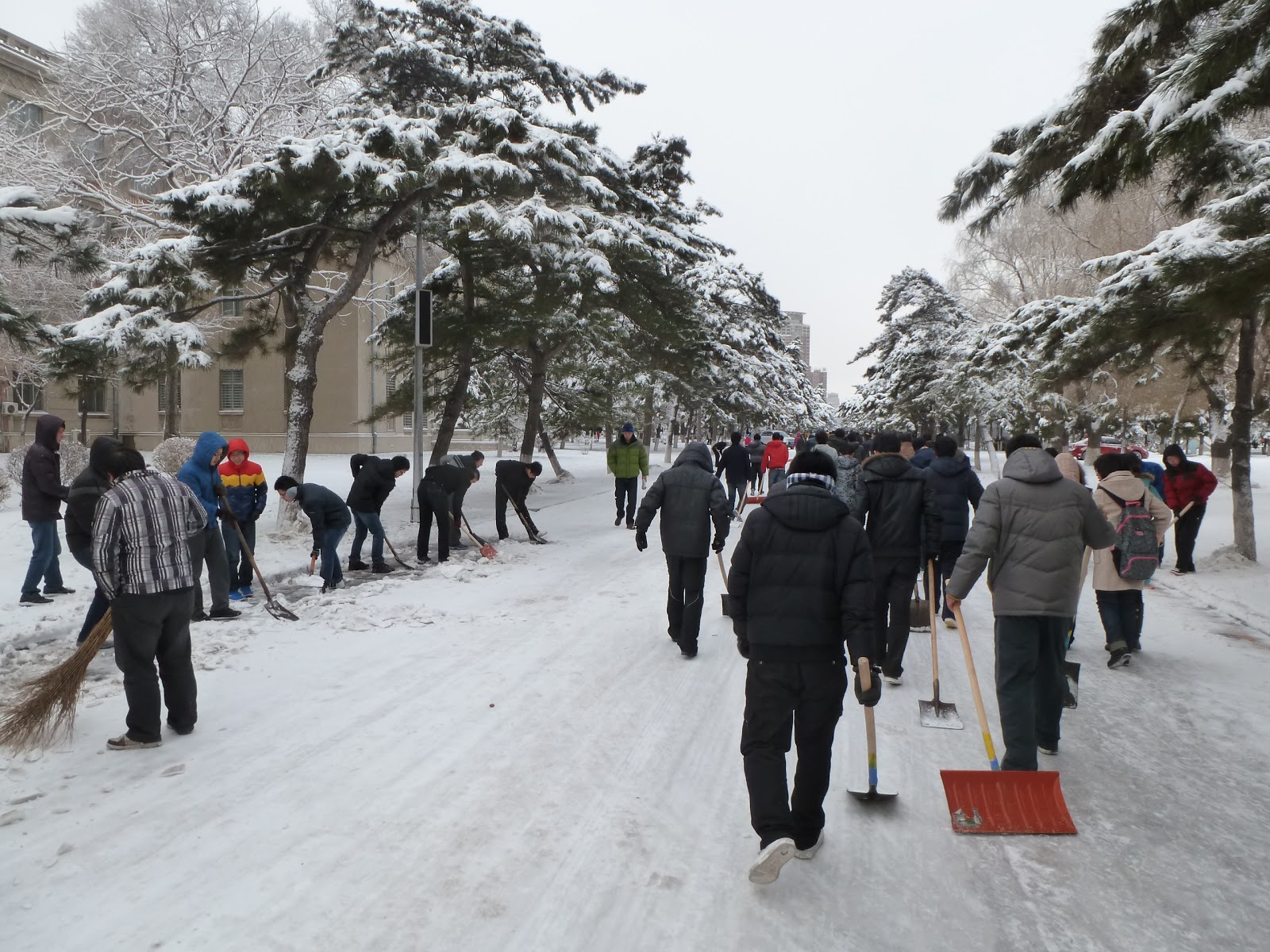


So thanks dear PLA basic military training for making the streets safer in winter......
Samstag, 13. Oktober 2012
Rising Tension.
 |
| This one pretty much explains itself. |
(钓鱼岛, actually meaning "Fishing Islands") belong. In case you havven`t heard about that, read something about it here:
http://en.wikipedia.org/wiki/Senkaku_Islands
http://en.wikipedia.org/wiki/Senkaku_Islands_dispute
The islands are uninhabited, but it is assumed that in this area lie large fishing grounds and mentionable oil reserves.
 |
| ( I ) love my country - protect/preserve the Diaoyu Islands |
Flanked by a national campaign of Anti-Japanese propaganda and ocassionally sending military ships into the region (of course Japan does the same). China and Japan have a lot of unresolved issues since WW II, as Japan until today still hasn`t completely come to terms with its past, and so other unresolved conflicts like this territotial one can be easily blown out of proportion.
 | |
| Get lost Japan! Diaoyu Islands belong to China |
The result of this Anti-Japanese campaigning can be seen on the pictures - a lot of Chinese expressing their - well, discontent about Japan on car stickers, displays and banners. Or at least that they love their country - including the Diaoyu Islands.
 | |
| Diaoyu Islands are China`s "mystical territory/magic land/territory of Gods and Demons". | Whatever that means. |
 |
| Love for China and Diaoyu Islands |
Additionally a lot of Anti-Japanese demonstrations and protests take place in front of Japanese embassies, so also here in Shenyang a couple of weeks ago. Also calls for boycotting Japanese restaurants and products can be heard every now and then. And it is said that first Chinese remove the brand logos from their Japanese cars as they fear them otherwise getting damaged.
So far haven`t heard of harassments of Japanese here in Shenyang, but I guess it must be an unpleasant feeling seeing such bumper stickers every day as an Japanese. And probably better to keep a little bit low profile as long as this ridiculous episode of "Who has the longest schlong in in East Asia" is going on.
Dienstag, 2. Oktober 2012
Where the Great Wall descends into the ocean - Shanhaiguan.

The Great Wall wasn`t exclusively built to keep out Mongolian Riders from the Chinese Empire. It should also keep out the Manchus who lived here in the northeast with Shenyang as it`s capital.


The "old dragon head" is the last and most eastern segment of the great wall and can be seen on the first pictures.

If you`re familiar with the history of China you already know that the Manchu who were supposed to be kept out of China took over the empire in 1644 and became its last dynasty, the Qing dynasty. In favor of the Great Wall - the Manchus didn`t surround, destroy or climb the wall, they were allowed to pass by Chinese troops in hope they would help wipe out rebels that were threatening the capital Beijing. There are two different stories going around how it happened, I´ll quote wikipedia with both:
.


Directly adjacent to this section of the wall is a fort and barracks where the everyday life of soldiers of the Ming dynasty (the one overthrown by the Manchus) is exhibited.

It´s beautiful to walk through, but as the "old dragon head" section, it´s fake. Or "restaurated", if you will. The original fort and wall didn`t make it through the centuries, and Shanhaiguan is one of the many spots where sections of the wall (and the fort) were rebuilt since the 80s.

Leaves behind the slight feeling of walking through an ancient Chinese Disneyland, but still, we had a great time. Shanhaiguan is far less crowded than other "restaurated" wall sections, e.g. Badaling near the capital Beijing.
And you can have a peek at the "real wall", too, you just have to get out of town a couple of kilometers. What we did and what you`ll be able to see in the next section. But hopefully first enjoy the last pictures in this section...


A look down at the most eastern point of the wall.

Afternoon walk at the beach. In the background: Ancient China (old dragon head) and Modern China (city harbor).
Jiaoshan 角山(jiǎoshān)

For the "real deal" you have to leave the city of Shanhaiguan and head for the mountains, which takes only about 20 min by taxi. There lies Jiaoshan, also called 天下第一山 (tian xia di yi shan) , "the first mountain under the heaven". Simply the first mountain the wall had to be constructed on starting from the sea....

.....where you`ll find both, a "restaurated" segment of the wall (built in 1986) linking to old sections down in the valley and on the top of the mountain.
This piece of the wall and the surrounding beautiful mountain scenery are also a popular setting for newly-weds getting their wedding pictures done, be it in (for China) traditional red.......

or modern, western white - whatever choice, the scenery is breathtaking.

When you first climb the wall, you`re immediately reminded you`re on a "new" piece of it by
1. a gift and souvenir shop
2. a red sign showing where to look to see the leftovers of the real wall.
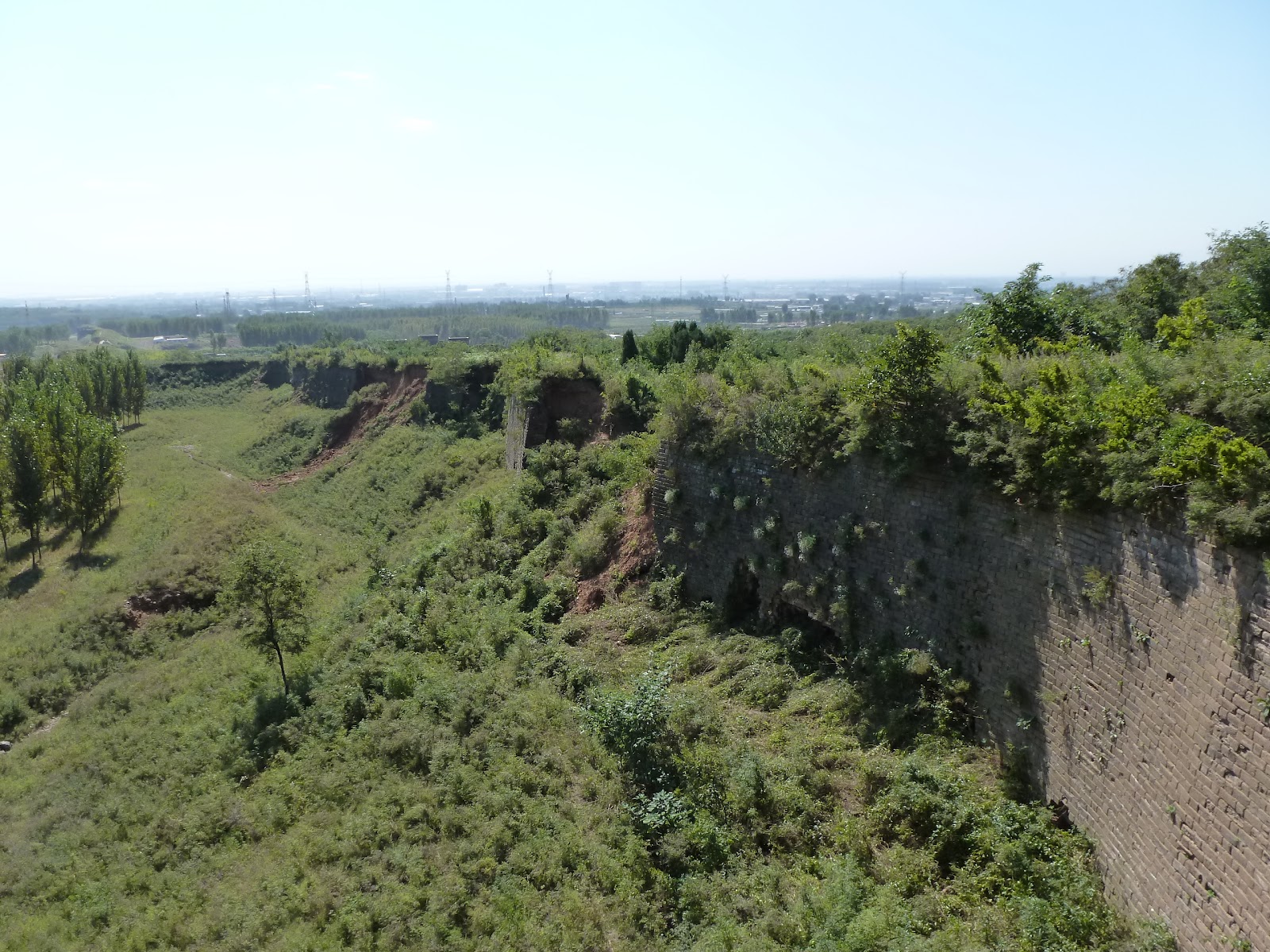
What you can see then hardly reminds of a real fortification anymore. In the last hundred years or so nature has conquered back the unrestaurated part between the coast and this mountain. You still can see where the wall winds through the valley to the city of Shanhaiguan, but what you see has more in common with a dam or dyke than a real weir system.

Anyway, the goal was to reach the watchtower at the top, so we three (Sven & Sam, old friends from Germany, were visiting) started climbing.


And as you can see, the wall and it`s steps can be pretty steep. The guards in the old imperial days on the wall must have been in great shape patroling this segment. Or monkeys.


Above - about halfway to the the watchtower the view`s already amazing.
Left- as is the level of steepness. Sven standing "upright".


The last part naturally is the most exhausting one, as the steepness during climbing the last stairs takes up a notch.


When you`ve finally arrived at the base of the tower, you can choose wether you stay on the wall and climb up or take stairs that make you walk around the last section of the wall.


Either way, the view is breathtaking - if you look up or down.
Above you can see the end of the new wall piece and the beginning of the old one heading up all the way to the mountain top. It`s prohibited to enter for tourists.
To the right is the view down from the tower base.
 The last challenge then was to climb the tower itself on a rusty ladder for having a smoke and enjoying once more the fantastic view:


Once more, the last few meters of the rebulit section converting into the old, unrestored, not passable section.


Right - me on the sidepath alongside the wall where we went back down on.
The last pictures also were taken from that path.


第一山 (dì yī shān), "the first mountain" written below the watchtower.


Abonnieren
Posts (Atom)